Showing posts with label Plato. Show all posts

Thursday, 29 September 2011

Plato was Right on One Thing

I read a very good blog post by Mr. Janusz Korwin-Mikke today, which translates into English something like this:

"Who rules in Poland?
If we listen to Mr. Janusz Palikot
[a prominent Polish leftist politician] we would be under the impression that the Roman Catholic Church rules Poland. If we listen to Fr. Tadeusz [a prominent Polish priest and media owner] we would be under the impression that we are ruled by Jews. Or perhaps: Freemasons. The Freemasons, on the other hand, suggest that the European continent is being ruled by "The Great East" - a rival, leftist organization, which seeks to impersonate the Masonry. The Catholic Church states we are still ruled by post-Communists - and the socialists think our rulers are the nasty capitalists.
The capitalists say that the labour unions have all the influence. But the unionists think that liberals have taken over.
Oh - and I forgot - there are also some people called politicians who claim that the real rulers are the bureaucrats
[...]"

Mr. Korwin-Mikke is a great man, a true leader of the classical liberal and Monarchist causes in Poland (which is probably why his political party has been unconstitutionally banned from this year's parliamentary elections). What he has correctly observed in the above segment is the Ship-of-State phenomenon first described by Plato is Book VI of his famous Republic. In this case, I would strongly suggest that people like Mr. Korwin-Mikke (or Ron Paul, for that matter) are those star-gazing philosopher kings. The ship ruled by Democracy can never take any course, but a disastrous one. It will be full of quarrels, fights, and agitation. Violence will break out periodically. The history of the democratic state is the history of oppression, taxation, and civil war.
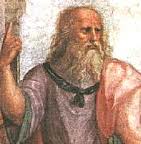
So here is the whole original Plato from Book VI, read and learn:
"Imagine then a fleet or a ship in which there is a captain who is taller and stronger than any of the crew, but he is a little deaf and has a similar infirmity in sight, and his knowledge of navigation is not much better. The sailors are quarrelling with one another about the steering --every one is of opinion that he has a right to steer, though he has never learned the art of navigation and cannot tell who taught him or when he learned, and will further assert that it cannot be taught, and they are ready to cut in pieces any one who says the contrary. They throng about the captain, begging and praying him to commit the helm to them; and if at any time they do not prevail, but others are preferred to them, they kill the others or throw them overboard, and having first chained up the noble captain's senses with drink or some narcotic drug, they mutiny and take possession of the ship and make free with the stores; thus, eating and drinking, they proceed on their voyage in such a manner as might be expected of them. Him who is their partisan and cleverly aids them in their plot for getting the ship out of the captain's hands into their own whether by force or persuasion, they compliment with the name of sailor, pilot, able seaman, and abuse the other sort of man, whom they call a good-for-nothing; but that the true pilot must pay attention to the year and seasons and sky and stars and winds, and whatever else belongs to his art, if he intends to be really qualified for the command of a ship, and that he must and will be the steerer, whether other people like or not-the possibility of this union of authority with the steerer's art has never seriously entered into their thoughts or been made part of their calling. Now in vessels which are in a state of mutiny and by sailors who are mutineers, how will the true pilot be regarded? Will he not be called by them a prater, a star-gazer, a good-for-nothing?"

Are we libertarians not often called star-gazers and dreamers with no realistic world-view whatsoever? We are the philosopher kings.

Monday, 15 August 2011

The Platonist Plague

Everyone knows the main flaw of the Platonist philosophy (and no, it isn't totalitarian utopianism): the belief that cocepts and ideas exist independently of the human mind. This means that, in essence, non-material things have a material existence somewhere outside the brain. The brain (or reason, to be precise) is only a medium which allows us to communicate with the world of ideas and draw knowledge from it. But this knowledge is not created by the mind, it is independent of it. Essentially Platonism is crazy, it is a mystical tradition which was picked up by Neo-Platonists such as St. Augustine and then passed on to through Hegel to Marx - the greatest spreader of such evil anti-human theology as communism and socialism in our world today.
Now it is true that I was heavily influenced by Plato myself in my early years of philosophical study and I still catch myself making some silly Platonic statements at times. Plato introduced me to the crucial concept of human nature and nature of other objects in general. His writings in this regard and rather useful - we can tell how and why his great pupil Aristotle (whose views are nearly a 180 degree reverse of Plato's) created his own ideas on nature. The introduction of the concept of nature (human nature and other things' natures) and its study of it is perhaps the single greatest contribution of ancient Greek philosophy.
Today, however, I see Platonism is exercising a very harmful effect on the minds of many people by fostering collectivism. When I opened the Polish news portal onet.pl I saw a number of headlines which were quotes from speeches by Polish politicians and other dignitaries pertaining to the holiday we are celebrating today. Here are the rough translations of the quotes:
1. President Bronisław Komorowski: "the Polish state is going through a test today"
2. Prime Minister Donald Tusk: "our National pride demands that the museum [General Pilsudski Museum] be created"
3. Archbishop Andrzej Dzięga: "the Nation has a right to ask questions about the Smolensk Catastrophe"
Now on the face of it these statements seem normal, but let's look at them from an individualist perspective. All these men above are naming fictional entities, none of which actually exist, and using personification in order to give these entities the appearance of intelligent acting beings. Thus 'National pride', 'the Polish state', and 'the Nation' have somehow become existing, speaking, acting things. They seem to have the right to 'demand' things from us! This is a deeply Platonic confusion which is now being applied by politicians, who probably actually believe in the truth of their words, in order to accomplish their goals.
But, NEWSFLASH GUYS, these 'beings' are not actually beings! They are only concepts which exist in your head! Continuing to personify such concepts and perhaps conversing with them (the men quoted above seem to know what the abstract concepts want) seems to me to be a sign of acute schizofrenia. I can no more access the knowledge of 'nation' than I can access other Platonic concepts like 'the good' or 'the beautiful'. The nation doesn't want anything because it doesn't have a mind to comprehend desire or a mouth to articulate it.
Or maybe someone can explain to me how can any such statements be in any way rational?

Baroness Margaret Thatcher, probably the greatest head-of-state in the 20th Century (at least in terms of ideological awareness) once said that "There is no such thing as society. There are individual men and women..." She understood that 'society' was a word now treated in a Platonic way. Rather than meaning the group of people occupying a certain area and sharing a community, 'society' became a living being, an entity with its own needs and goals. This is, of course, rather ridiculous. But such is the language of all mystics.